Why Water Tanks Get Dirty Again After Maintenance: 5 Causes
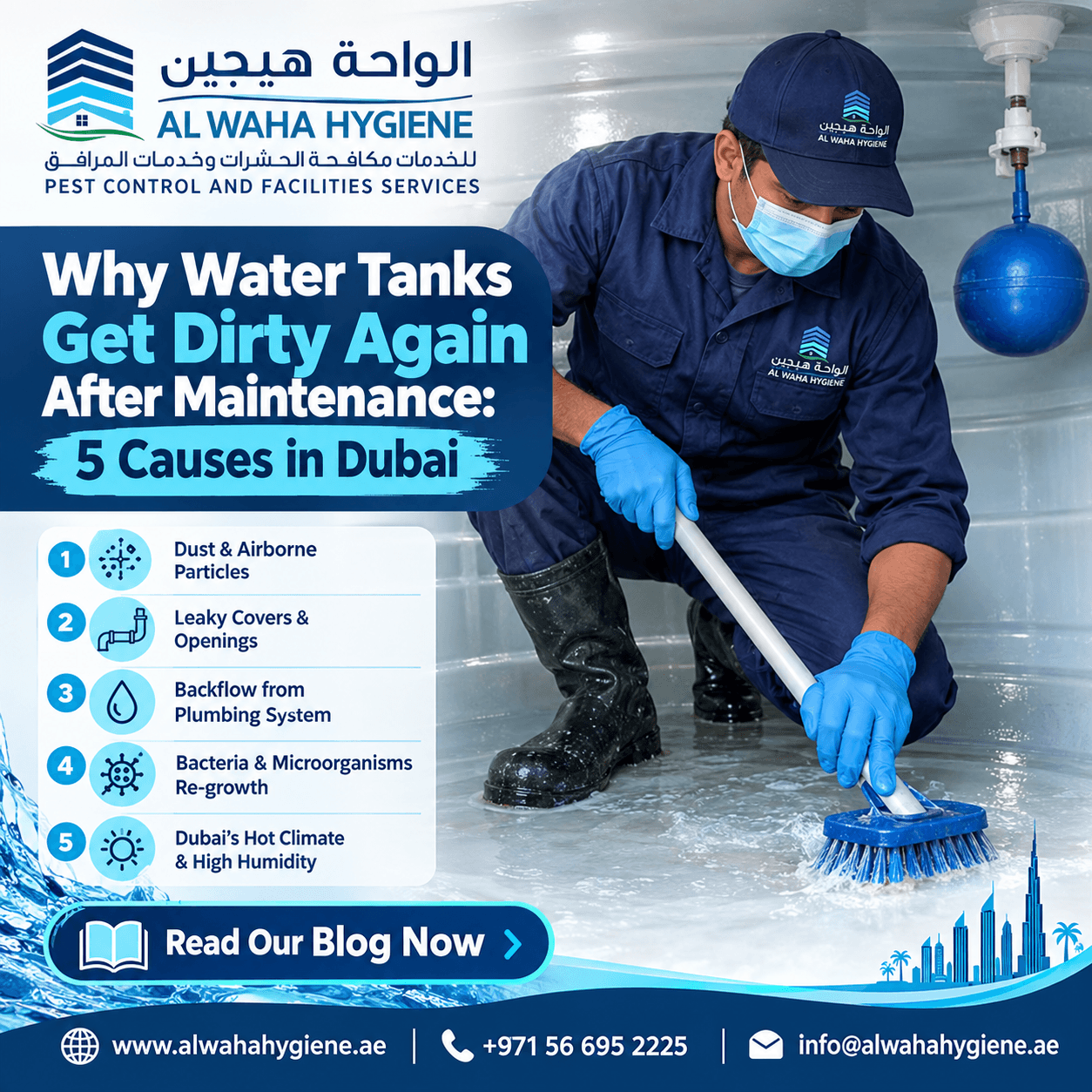
Cleaning a water tank does not always prevent dirt from returning. In Dubai, heat, dust, sediment, damaged tank covers, and problems inside connected pipes can affect stored water even after maintenance. Understanding these causes helps property owners know when water tank cleaning Dubai services may be needed again and how Al Waha Hygiene can help maintain better water storage hygiene.
1. Sediment Remains at the Bottom of the Tank
Sand, dust, and mineral deposits can settle at the bottom of a water tank over time. If maintenance removes only the visible dirt or drains the water without properly collecting the sediment, deposits may remain and mix with fresh water later.
How to prevent it: The tank should be inspected, and accumulated sludge should be removed using suitable equipment. Thorough rinsing and appropriate disinfection should follow when required. The cleaning method must match the tank’s material and condition.
2. Biofilm Is Not Removed Completely
A slimy layer on the tank walls may contain biofilm, a community of microorganisms attached to a surface. If this layer is not adequately removed, deposits may develop again even when the tank initially looks clean.
How to prevent it: Use suitable cleaning tools and a compatible disinfection procedure. Abrasive brushes and unsuitable chemicals can damage tank surfaces. If slime returns repeatedly, investigate the underlying cause rather than relying on repeated surface cleaning alone.
3. Damaged Covers Allow Dust and Pests to Enter
A loose lid, broken seal, or uncovered access opening can allow dust, insects, and other contaminants to enter the tank. This can be particularly relevant for rooftop tanks exposed to Dubai’s dusty conditions.
How to prevent it: Inspect covers, access hatches, vents, and seals after maintenance. Ensure openings are properly secured while allowing any required ventilation and overflow arrangements to function safely. If pest activity is found around the property, suitable pest control Dubai services can help address the wider issue.
4. Connected Pipes or Water Inlets Introduce New Contaminants
Sometimes, the tank itself is not the only source of the problem. Sediment in connected pipes, disturbed deposits, plumbing defects, or contamination entering through the supply system can affect water after the tank has been cleaned.
How to prevent it: Check accessible pipework, inlet points, and the tank’s internal condition. If discolouration or unusual odours continue, investigate the water supply and plumbing system before scheduling another cleaning. A water quality test Dubai service may help identify relevant physical, chemical, or microbiological concerns.
5. Maintenance Does Not Address the Root Cause
Cleaning may provide only temporary improvement if the underlying problem is ignored. For example, a damaged tank lining, recurring leaks, poor sealing, or unsuitable maintenance practices may allow contamination to return.
How to prevent it: Keep a record of maintenance dates, observed problems, and repairs. Arrange inspections based on the tank’s condition, usage, and applicable local requirements. For properties with wider hygiene concerns, deep cleaning Dubai services may support cleanliness in surrounding areas, although they do not replace proper tank maintenance.
Businesses managing offices, restaurants, hotels, and residential buildings may also benefit from scheduled commercial cleaning Dubai to maintain hygiene throughout their premises.
How Can You Keep a Water Tank Cleaner for Longer?
Follow these practical steps:
- Inspect the tank cover and visible connections regularly.
- Check for unusual smells, discolouration, slime, or sediment.
- Remove the underlying cause instead of repeatedly treating the symptoms.
- Use cleaning products suitable for water storage systems.
- Arrange professional inspection and cleaning according to the tank’s condition and applicable requirements.
- Consider water testing when contamination is suspected.
If insects or rodents are repeatedly found near water storage areas, searching for pest control near you can help you find a suitable provider to address the surrounding pest issue.
How Al Waha Hygiene Can Help
Al Waha Hygiene helps property owners in Dubai address water storage hygiene concerns through appropriate cleaning and maintenance practices. The correct approach depends on tank material, accessibility, visible deposits, and the suspected source of contamination.
If dirt returns soon after maintenance, identifying the cause is just as important as cleaning the tank itself. Proper inspection, suitable cleaning techniques, secure covers, and timely corrective action can help reduce recurring problems and support safer water storage.
FAQs
1. Why does dirt return after a water tank is cleaned?
Dirt may return because sediment remains, biofilm is not fully removed, covers allow contaminants inside, or connected pipes introduce deposits. Identifying the source helps prevent recurring problems.
2. How can I prevent sludge from building up in my tank?
Arrange suitable sediment removal, inspect the tank periodically, and investigate recurring deposits. The appropriate maintenance frequency depends on water quality, tank condition, usage, and applicable local requirements.
3. Can bacteria grow again after tank disinfection?
Yes. Disinfection does not prevent future contamination indefinitely. Bacteria may return if contaminated water enters the tank, biofilm remains, or storage conditions allow microbial growth.
4. Why does slime develop on water tank walls?
Slime may result from biofilm formation on damp surfaces. Deposits, incoming contaminants, and incomplete cleaning can contribute to its return. Persistent slime requires investigation and suitable cleaning.
5. Can a damaged tank cover affect water quality?
Yes. Gaps around covers or access openings may allow dust, insects, and other contaminants to enter. Secure covers and properly maintained seals help reduce these risks.
6. Why does tank water become cloudy after cleaning?
Cloudiness may result from disturbed sediment, air bubbles, plumbing deposits, or other contaminants. If it persists, investigate the cause and assess water safety before drinking the water.
7. How often should a water tank be inspected in Dubai?
Inspection frequency depends on the tank’s condition, usage, and applicable requirements. Regular visual checks can help identify damaged covers, leaks, deposits, and other issues before they worsen.
8. Does cleaning a water tank guarantee safe drinking water?
No. Cleaning helps remove deposits and may reduce contamination, but it cannot guarantee drinking-water safety. Appropriate water testing may be necessary when contamination is suspected.
9. Should pipes be checked when tank dirt keeps returning?
Yes. Sediment, plumbing defects, and contamination entering through connected pipes can affect water quality after cleaning. Inspect the system and investigate persistent problems before repeating maintenance.
10. What should I do if water smells bad after tank maintenance?
Avoid drinking water when contamination is suspected. Check for persistent odours, inspect accessible plumbing, and seek professional assessment. Appropriate water testing may help determine the cause.