5 Hidden Cleaning Problems Every Abu Dhabi Business Should Notice
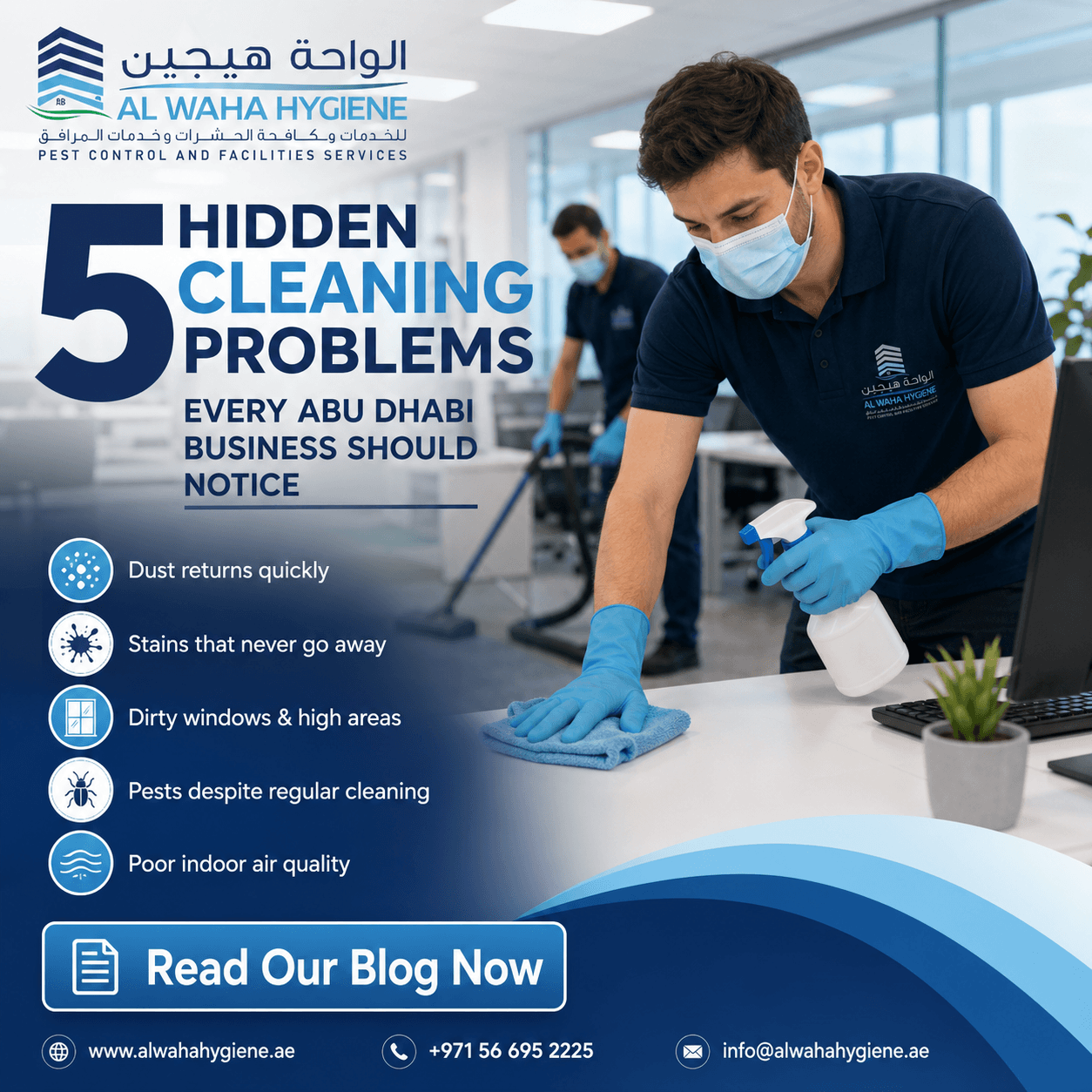
Keeping a workplace clean in Abu Dhabi is more challenging than many business owners expect. Dust, humidity, heavy foot traffic, and daily operations slowly affect indoor cleanliness, employee comfort, and customer impressions. While many businesses schedule regular housekeeping, they often overlook deeper hygiene issues that require professional attention. If you’re looking for commercial cleaning Abu Dhabi services, understanding these common problems first helps you know when routine cleaning is no longer enough.
Why Regular Office Cleaning Sometimes Isn’t Enough
Daily cleaning removes visible dirt, empties bins, and wipes workstations. However, hidden dust, bacteria, grease, and contaminants continue building inside carpets, ventilation areas, washrooms, and shared spaces.
Over time, these unnoticed issues can lead to:
- Poor indoor air quality
- Unpleasant odors
- Faster wear of office furniture
- Increased employee allergies
- Negative customer impressions
Recognizing these signs early helps businesses maintain healthier and more professional workplaces.
Problem 1: Dust Returns Only Hours After Cleaning
Abu Dhabi’s environment naturally brings fine dust into commercial buildings through entrances, ventilation systems, and frequent movement.
If dust quickly reappears after routine cleaning, the issue often goes beyond surface maintenance. Hidden dust inside carpets, upholstery, ceiling vents, and hard-to-reach areas usually requires a more detailed cleaning approach.
Businesses experiencing this regularly should consider scheduling professional Commercial Cleaning services rather than relying only on daily housekeeping.
Problem 2: Stains Keep Coming Back
Coffee spills, food stains, dirty carpets, and marked flooring often seem impossible to remove completely.
This usually happens because surface cleaning only removes visible dirt while contaminants remain trapped underneath.
In these situations, professional deep cleaning Abu Dhabi services can restore carpets, flooring, kitchens, washrooms, and high-touch surfaces more effectively than everyday cleaning methods.
Problem 3: High Windows and Building Exteriors Stay Dirty
Many commercial buildings include glass facades, high windows, atriums, and difficult-to-reach exterior surfaces.
These areas collect dust, pollution, and sand throughout the year, reducing the building’s appearance and natural light.
Instead of using unsafe methods, businesses typically rely on rope access cleaning Abu Dhabi specialists who can safely clean elevated surfaces without disrupting daily operations.
Problem 4: Cleaning Doesn’t Stop Pest Activity
Even offices that appear clean may experience insects or pests if food waste, moisture, or hidden dirt accumulates behind equipment, kitchens, storage rooms, or waste areas.
Cleaning improves hygiene, but it cannot completely eliminate pest infestations once they begin.
When pest activity becomes noticeable, businesses should combine proper sanitation with professional pest control Abu Dhabi services to address both the source and the infestation.
Problem 5: Employees Frequently Complain About Air Quality
Poor indoor air quality often develops gradually. Employees may report headaches, allergies, excessive dust, or unpleasant smells without realizing cleanliness is contributing to the problem.
Dirty carpets, neglected upholstery, contaminated air vents, and poorly maintained washrooms can all affect workplace comfort.
A professional cleaning assessment can help identify areas that routine maintenance often misses.
How Businesses Can Prevent These Problems
Instead of waiting until hygiene issues become visible, businesses should follow a preventive cleaning strategy.
Good practices include:
- Schedule regular workplace inspections.
- Clean high-touch surfaces daily.
- Maintain carpets and upholstered furniture.
- Keep washrooms sanitized.
- Monitor indoor air quality.
- Address stains before they become permanent.
- Clean hard-to-reach areas on a planned schedule.
- Review cleaning standards regularly.
Preventive maintenance usually costs less than correcting long-term hygiene problems.
When Should You Consider Professional Commercial Cleaning?
Professional cleaning becomes valuable when businesses notice:
- Dust returning quickly
- Persistent odors
- Stained carpets
- Dirty high-level glass
- Employee allergy complaints
- Increased customer dissatisfaction
- Areas that routine cleaners cannot safely access
Professional cleaning focuses on restoring hygiene standards rather than simply improving appearance.
Why Businesses Choose Al Waha Hygiene
At Al Waha Hygiene, we understand that every commercial property has different cleaning challenges. Rather than offering one-size-fits-all solutions, we help businesses identify hidden hygiene problems and recommend cleaning services based on their actual requirements.
Whether routine maintenance is enough or deeper cleaning is needed, our goal is to help businesses maintain healthier, safer, and more professional workplaces throughout Abu Dhabi.
Frequently Asked Questions
1. How do I know if my office needs professional commercial cleaning?
If dust returns quickly, odors remain after cleaning, stains persist, or employees complain about allergies, routine cleaning may no longer be sufficient. A professional assessment helps identify hidden hygiene issues before they become bigger problems.
2. How often should commercial premises be professionally cleaned?
Most offices benefit from professional cleaning every three to six months, depending on employee numbers, visitor traffic, and business activities. High-traffic environments may require more frequent deep cleaning.
3. What’s the difference between daily cleaning and commercial cleaning?
Daily cleaning focuses on visible surfaces and routine maintenance. Commercial cleaning addresses deeper hygiene concerns, including carpets, upholstery, washrooms, difficult-to-reach areas, and built-up contaminants.
4. Why does dust return so quickly in Abu Dhabi?
Abu Dhabi’s climate includes fine sand and airborne dust that continuously enters buildings through doors, windows, and ventilation systems. Regular maintenance reduces accumulation, but periodic professional cleaning helps remove hidden dust.
5. Can commercial cleaning improve indoor air quality?
Yes. Removing accumulated dust, allergens, and contaminants from carpets, furniture, and other surfaces can improve workplace air quality and create a healthier environment for employees.
6. Is deep cleaning necessary if my office is cleaned daily?
Yes. Daily cleaning maintains appearance, while deep cleaning removes hidden dirt, bacteria, and grime that routine cleaning cannot fully eliminate.
7. Are high-rise office windows difficult to maintain?
Yes. High windows require specialized equipment and trained professionals to ensure safe and effective cleaning without disrupting business operations.
8. Does cleaning alone prevent pest problems?
Cleaning reduces conditions that attract pests, but existing infestations usually require professional pest management alongside proper sanitation practices.
9. Which office areas are commonly overlooked during routine cleaning?
Air vents, carpets, upholstery, storage rooms, high shelves, behind furniture, and elevated glass areas are often missed during standard cleaning routines.
10. How can businesses maintain a consistently clean workplace?
Combine daily housekeeping with scheduled professional inspections, periodic deep cleaning, proper waste management, and timely maintenance of high-risk areas.
11. Does professional cleaning help create a better customer impression?
Yes. Clean premises improve first impressions, demonstrate professionalism, and help build trust with visitors, customers, and business partners.
12. Is commercial cleaning suitable for small businesses?
Absolutely. Professional cleaning can be tailored to offices of any size, ensuring healthier workspaces without unnecessary services.
13. What are the first signs that routine cleaning is no longer effective?
Recurring dust, stubborn stains, lingering odors, increased allergies, and dirty high-level surfaces are common indicators that more comprehensive cleaning may be needed.
14. How does preventive cleaning reduce long-term maintenance costs?
Regular professional cleaning prevents dirt buildup, protects flooring and furniture, improves hygiene, and helps avoid expensive restoration or replacement work later.
15. Why is identifying cleaning problems early important?
Early detection prevents minor hygiene issues from becoming larger operational problems, helping businesses maintain a healthier workplace, better employee productivity, and a more professional image.