Why Does Your Kitchen Drain Keep Getting Blocked?
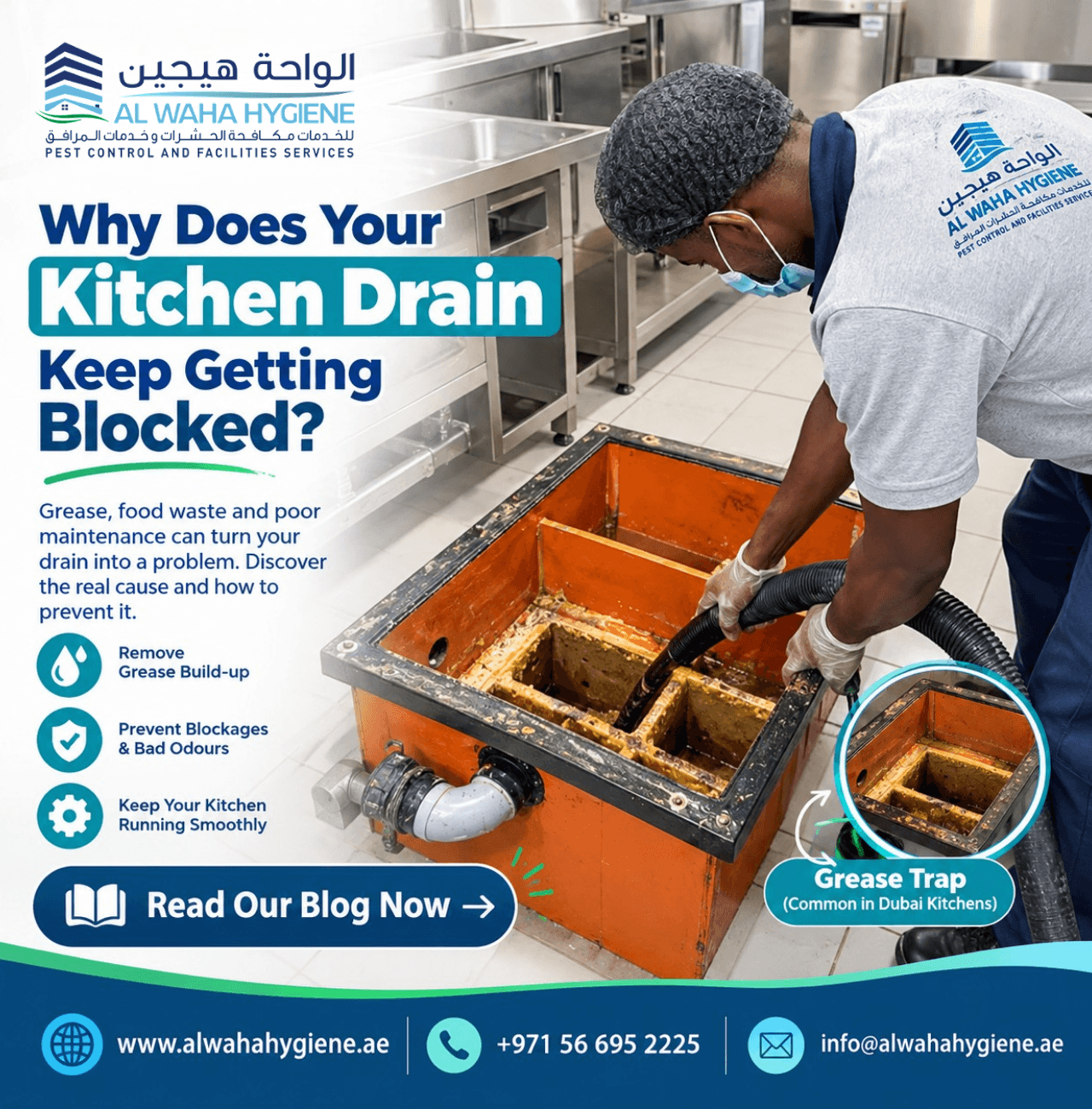
Slow drains, foul smells, and wastewater backups can create serious problems for restaurants, hotels, cafeterias, and commercial kitchens in Dubai. Regular grease trap cleaning Dubai services can help businesses manage grease buildup, while proper daily practices reduce drainage problems and support kitchen hygiene. Al Waha Hygiene helps businesses understand these issues and maintain cleaner, more efficient drainage systems.
What Causes Grease Trap Blockages?
Grease traps collect fats, oils, and grease (FOG) before they enter the drainage system. However, food scraps, excessive cooking oil, and solid waste can build up inside the unit. When accumulated grease reduces the available space, wastewater may drain slowly or back up into the kitchen.
Dubai’s busy food businesses can face these problems when traps are not inspected or emptied at suitable intervals. Heavy kitchen use, poor waste disposal habits, and neglected maintenance can make blockages more frequent.
5 Warning Signs Your Grease Trap Needs Attention
Look out for these common warning signs:
- Slow drainage: Water takes longer than usual to leave sinks.
- Unpleasant smells: Rotten or sour odours develop near sinks or floor drains.
- Water backups: Wastewater rises through drains or collects around kitchen fixtures.
- Visible grease: Grease or oily residue appears around drain openings.
- Frequent plumbing issues: Staff repeatedly deal with blockages despite basic cleaning.
These signs indicate that the trap or connected drainage lines may need inspection. Ignoring them can lead to kitchen disruption, hygiene concerns, and expensive emergency repairs.
How Can Dubai Food Businesses Prevent Grease Buildup?
Prevention starts with simple kitchen habits. Scrape leftover food into waste bins before washing utensils, collect used cooking oil separately, and avoid pouring fats or grease directly into sinks. Use drain strainers to catch food particles and train kitchen staff to follow consistent waste-handling procedures.
Businesses should also maintain a cleaning schedule based on kitchen activity, grease accumulation, and the trap manufacturer’s recommendations. A small, busy restaurant may need more frequent attention than a kitchen with lower grease output.
Understanding Dubai Municipality Requirements
Food businesses should follow applicable Dubai Municipality requirements for grease management, wastewater disposal, and commercial kitchen hygiene. Keep maintenance records, arrange appropriate waste collection, and ensure grease is disposed of through approved channels where required. Businesses should confirm the current requirements that apply to their premises rather than relying on informal advice.
When Is Professional Inspection Necessary?
If blockages return soon after cleaning, smells persist, or wastewater repeatedly backs up, the problem may extend beyond the trap. Damaged pipes, restricted outlets, incorrect installation, or heavy grease accumulation can all affect drainage performance.
Professional deep cleaning Dubai services may help address wider hygiene concerns in areas that routine surface cleaning cannot adequately reach. However, deep cleaning should complement; not replace; proper grease trap maintenance.
For kitchens managing grease-related sanitation concerns alongside general premises hygiene, suitable commercial cleaning Dubai services can support cleaner work areas, floors, and food preparation surroundings. Each cleaning task should be selected according to the actual problem.
Grease buildup and food waste can also attract flies and other pests. If your kitchen has recurring pest activity, pest control Dubai services may help identify entry points and address infestations. Correct waste storage, clean drains, and regular grease removal remain important preventive measures.
If you notice flies around drains, cockroaches near kitchen equipment, or pests gathering around waste areas, consider arranging an inspection through a reliable pest control near you provider. Pest treatment works best when combined with improved sanitation and effective waste management.
How Al Waha Hygiene Can Help
Al Waha Hygiene supports businesses dealing with grease accumulation, drainage concerns, and commercial hygiene challenges. Professional assessment can help identify the source of recurring problems and determine the appropriate maintenance approach for your kitchen.
Instead of waiting for a major blockage, arrange an inspection when warning signs first appear. A consistent maintenance plan can reduce unpleasant odours, improve drainage reliability, and help your team maintain a cleaner working environment.
Need help with recurring kitchen drainage problems? Contact Al Waha Hygiene to discuss your requirements and arrange suitable professional assistance.
Frequently Asked Questions
1. Why does my kitchen drain keep getting blocked?
Grease, food scraps, soap residue, and other debris can accumulate inside pipes or traps. Regular waste removal, drain strainers, and scheduled inspections help reduce recurring blockages.
2. How do I know if my grease trap is full?
Common signs include slow drainage, strong odours, visible grease, and wastewater backups. An inspection can confirm whether accumulated waste requires removal or the system needs repairs.
3. How often should a grease trap be cleaned?
Cleaning frequency depends on trap capacity, kitchen activity, grease output, and applicable requirements. Inspect it regularly and arrange cleaning before accumulated waste interferes with proper operation.
4. Why does my grease trap smell bad?
Strong smells can develop when fats, food waste, and organic matter accumulate. A dirty cover seal, blocked outlet, or inadequate maintenance may also contribute to persistent odours.
5. Can pouring hot water into a drain remove grease?
Hot water may temporarily move grease farther into pipes, where it can cool and solidify. Collect cooking oil separately and avoid relying on hot water as a grease-removal solution.
6. What should restaurants do with used cooking oil?
Collect used cooking oil in suitable containers and arrange disposal through an appropriate waste collection service. Never pour it into sinks, floor drains, or stormwater drains.
7. What causes repeated grease trap blockages?
Repeated blockages may result from excessive grease, insufficient cleaning, damaged pipes, incorrect installation, or restricted outlets. A professional inspection can help identify the underlying cause.
8. Are grease traps important for restaurants in Dubai?
Grease traps help prevent fats, oils, and grease from entering drainage systems. Restaurants should maintain suitable equipment and follow the requirements applicable to their premises.
9. Can grease trap problems attract pests?
Yes. Food residue, damp waste, and dirty drains can provide conditions that attract flies and other pests. Proper sanitation, waste management, and suitable pest treatment help reduce this risk.
10. When should I call a professional for drainage problems?
Seek professional help when drains repeatedly block, wastewater backs up, or unpleasant smells persist despite routine cleaning. Prompt assessment can help prevent more serious plumbing and hygiene problems.