How Professional Grease Trap Maintenance Helps Prevent Restaurant Drain Problems in Dubai
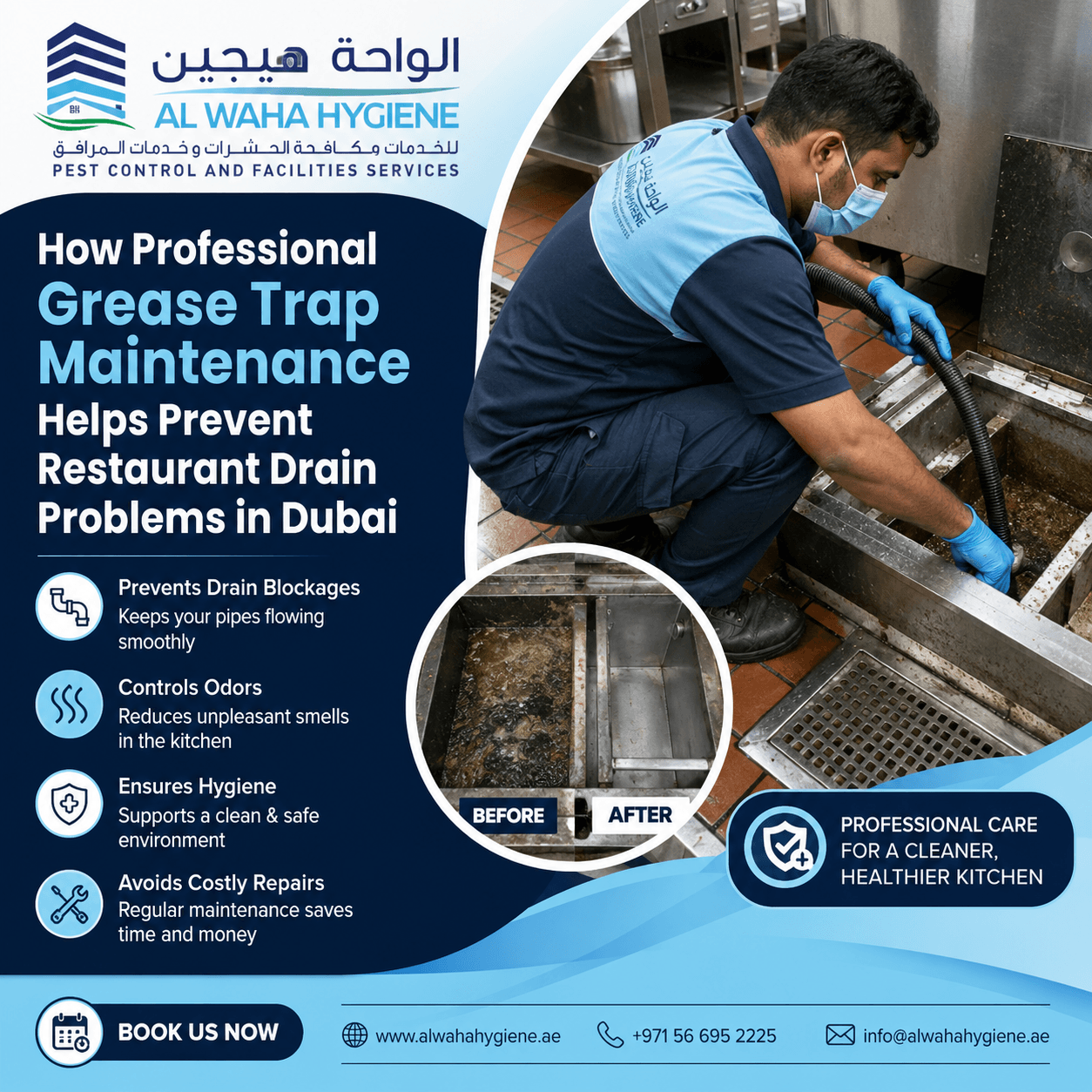
For restaurants, cafés, and commercial kitchens, maintaining a clean drainage system is essential for smooth daily operations. While professional grease trap cleaning Dubai services are responsible for removing accumulated fats, oils, and grease from traps, restaurant owners should also understand the importance of routine maintenance practices that help prevent costly drainage issues. At Al Waha Hygiene, we often educate businesses about simple preventive measures that support long-term grease management and overall kitchen hygiene.
Why Grease Trap Maintenance Matters
Grease traps are designed to capture fats, oils, and grease before they enter the drainage system. Over time, these substances accumulate and can create serious operational problems if not monitored properly.
Common issues caused by poor grease trap maintenance include:
- Slow-draining sinks
- Unpleasant kitchen odors
- Pipe blockages
- Overflow incidents
- Increased maintenance costs
- Health and hygiene concerns
A proactive maintenance approach helps businesses reduce the likelihood of unexpected disruptions.
Understanding Grease Accumulation
Commercial kitchens generate large amounts of grease every day. Even when staff follow proper disposal procedures, small amounts of oil and food residue enter the drainage system.
Over time, these materials separate from wastewater and collect inside the grease trap. If left unattended, buildup can affect drainage performance and increase the risk of blockages throughout the plumbing system.
Regular inspections help identify excessive accumulation before it becomes a major concern.
Essential Preparation Before Inspection
Anyone responsible for monitoring a grease trap should use appropriate protective equipment.
Recommended safety items include:
- Protective coveralls
- Safety goggles
- Face mask
- Heavy-duty rubber gloves
- Scraping tools
- Sealed waste containers
Proper safety precautions help ensure a cleaner and safer inspection process.
Inspecting the Grease Trap
Routine inspections allow restaurant managers to assess grease levels and identify potential issues early.
During an inspection, pay attention to:
- Visible grease accumulation
- Unusual odors
- Signs of overflow
- Damaged components
- Restricted water flow
Documenting inspection results can help establish an effective maintenance schedule.
Removing Excess Grease Buildup
When grease accumulation becomes excessive, it can interfere with the trap’s ability to separate waste effectively.
The removal process typically involves:
- Extracting accumulated grease
- Collecting waste materials safely
- Separating solid debris
- Preparing the trap for further cleaning
Many restaurant operators prefer professional assistance because the process can be time-consuming and unpleasant.
Cleaning Internal Components
Grease often adheres to internal surfaces, including walls, pipes, and baffles.
These components play an important role in separating grease from wastewater and should remain free from excessive buildup.
Proper cleaning focuses on removing residue from:
- Internal walls
- Inlet pipes
- Outlet pipes
- Baffle systems
Thorough cleaning helps maintain efficient wastewater flow.
Checking Drainage Performance
After maintenance activities are completed, drainage performance should be evaluated.
Signs of a properly functioning system include:
- Smooth water flow
- No standing water
- No unusual odors
- Consistent drainage speed
Any signs of backup or restricted flow may indicate a blockage elsewhere in the plumbing system.
Building a Preventive Maintenance Schedule
Every restaurant operates differently, so maintenance requirements can vary based on kitchen activity levels.
Factors that influence maintenance frequency include:
- Daily food production volume
- Type of cuisine served
- Amount of cooking oil used
- Number of operating hours
Creating a structured maintenance schedule helps reduce emergency service calls and supports regulatory compliance.
Supporting Overall Hygiene Standards
Grease trap maintenance should be part of a broader facility hygiene strategy. Many restaurants combine drainage maintenance with services such as water tank cleaning Dubai to maintain clean water systems throughout their premises.
Similarly, periodic deep cleaning Dubai services can help remove grease, dirt, and contaminants from kitchen surfaces that are difficult to reach during daily cleaning routines.
Businesses also benefit from scheduled pest control Dubai solutions, as food residue and grease accumulation can attract unwanted pests if sanitation standards are not maintained.
Why Professional Support Makes a Difference
Professional service providers have the equipment, expertise, and disposal procedures necessary to manage grease-related waste efficiently.
By partnering with experienced specialists such as Al Waha Hygiene, restaurant owners can focus on daily operations while ensuring that their drainage systems remain in good working condition.
Conclusion
Grease trap maintenance is an important part of restaurant facility management. Regular inspections, timely grease removal, and preventive cleaning practices help reduce the risk of drainage problems and operational disruptions. When combined with professional maintenance support and broader hygiene services, businesses can create a cleaner, safer, and more efficient working environment.