
What to Consider Before Cleaning an Underground Tank
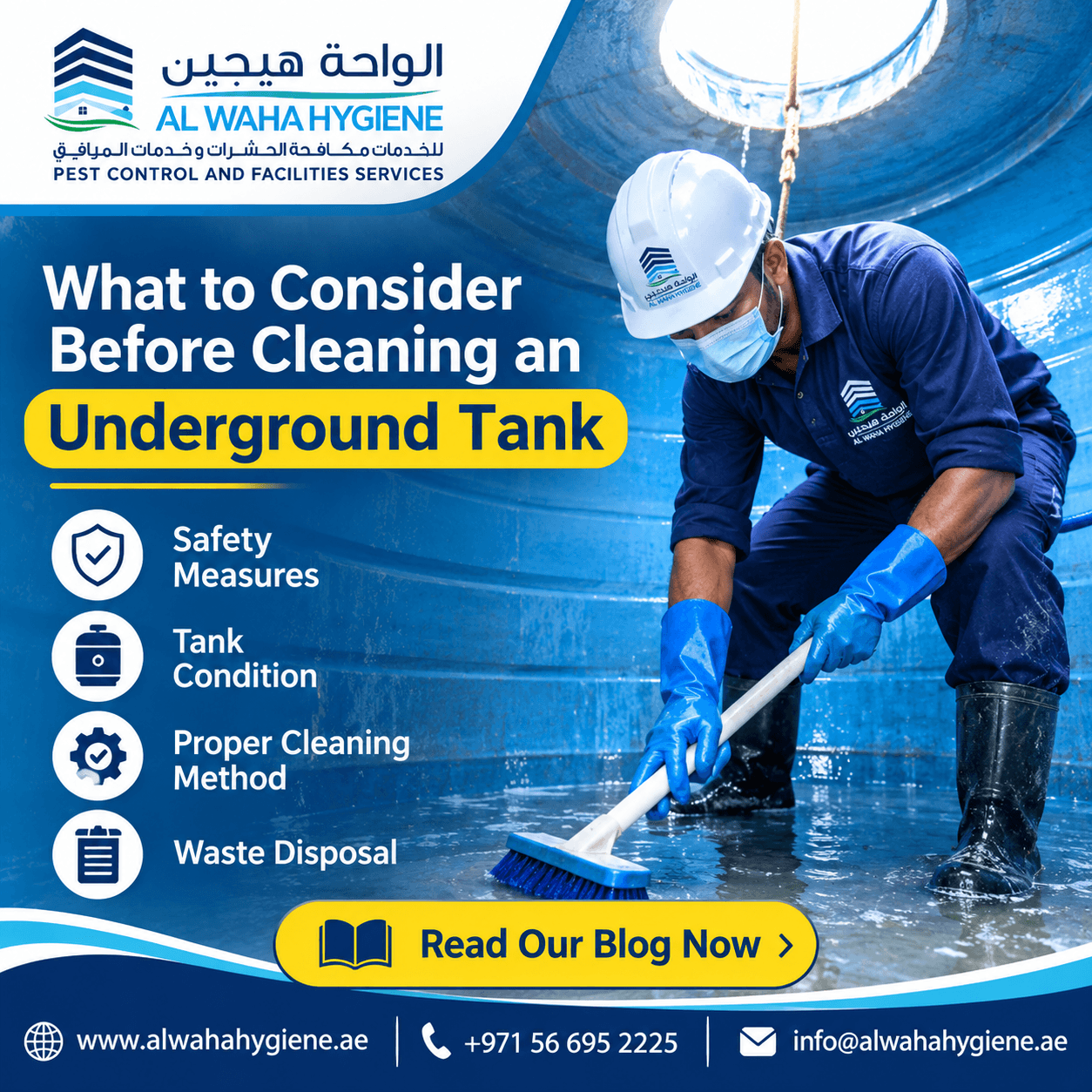
Underground water tanks are commonly used in Dubai villas, residential buildings, and commercial properties. However, cleaning them requires more planning than cleaning an easily accessible storage tank. Property owners looking for water tank cleaning Dubai should consider tank access, accumulated sludge, drainage arrangements and safety precautions before scheduling a cleaning visit. Proper preparation helps avoid delays and ensures that the cleaning work addresses the actual condition of the tank.
1. Check the Tank Location and Accessibility
Before arranging a cleaning appointment, identify where the underground tank is located. Some tanks have access openings inside parking areas, gardens or utility rooms. Others may be located beneath paved surfaces or restricted spaces.
Make sure the access cover can be opened safely and that the cleaning team has enough space to bring its equipment. Remove vehicles, stored materials or other obstacles around the access point. Difficult access should be discussed with the service provider before confirming the appointment.
2. Understand the Tank’s Current Condition
An underground tank may collect sand, sediment, dirt and other deposits over time. However, the amount of buildup depends on the tank’s condition, water usage and previous maintenance.
Before cleaning, check whether there are visible cracks, damaged internal surfaces, leakage or unusual deposits. Inform the cleaning team about any previous problems. If structural damage is identified, it may require separate repair work rather than cleaning alone.
3. Plan Water Supply and Drainage
Cleaning generally requires the stored water to be removed so that internal surfaces can be accessed properly. Property owners should therefore plan how household or building water requirements will be managed during the work.
Keep sufficient water available for essential activities and inform residents or employees about the expected interruption. For larger properties, coordinate the work with building management to reduce inconvenience. Also discuss how wastewater and removed sludge will be handled safely.
4. Give Importance to Safety Precautions
Underground tanks can create confined-space hazards because of restricted entry, limited ventilation and difficult emergency access. Entering an empty tank without suitable precautions can expose workers to serious risks.
Never allow untrained individuals to enter the tank for inspection or cleaning. Professional teams should assess the risks before starting, arrange appropriate ventilation and use suitable protective equipment. Gas monitoring, safe entry procedures and emergency arrangements should be considered whenever entry is necessary.
5. Discuss the Cleaning Method and Equipment
Not every underground tank has the same construction or cleaning requirements. The appropriate method depends on the tank material, size, access conditions and amount of accumulated deposits.
Ask whether the service includes sludge removal, internal surface cleaning, suitable disinfection, and proper rinsing. Equipment should be appropriate for the tank structure to avoid unnecessary damage. A proper inspection also helps identify areas that require additional attention.
6. Check Applicable Dubai Requirements
Property owners should confirm that the selected service provider has the relevant Dubai Municipality approval for water tank cleaning and disinfection, where required. Ask about the cleaning procedure, chemicals used, worker training, and service documentation.
Dubai Municipality’s drinking-water guidance covers hygiene requirements for water storage systems. Owners and building managers should keep relevant cleaning and inspection records and check current requirements applicable to their property.
For properties requiring further investigation, a water quality test Dubai service can help assess possible contamination through appropriate laboratory analysis. Testing is particularly relevant when unusual water conditions or suspected contamination are reported.
7. Plan the Work Around Other Property Maintenance
Underground tank cleaning can be easier to coordinate when planned alongside other essential property maintenance activities. However, different cleaning tasks should have clearly defined scopes and should not interfere with the tank cleaning procedure.
For example, arranging deep cleaning Dubai services can help maintain cleaner indoor and shared spaces as part of a wider property hygiene plan.
Commercial property managers can also coordinate commercial cleaning Dubai activities around maintenance schedules to reduce disruption to employees, customers, and daily operations.
If insects or rodents are found around the tank access area, appropriate pest control Dubai measures may also be necessary to address the surrounding hygiene concern.
For recurring pest problems around residential properties, professional pest control near you services can provide additional support alongside regular property maintenance.
8. Request a Final Inspection and Service Report
After cleaning, the tank should be checked before being returned to normal use. Confirm that visible deposits have been removed, internal surfaces have been properly treated, and rinsing has been completed according to the cleaning procedure.
Ask for a service report describing the work performed and any problems identified during inspection. Photographs, where available, can help property owners understand the tank’s condition before and after cleaning.
Conclusion
Cleaning an underground water tank requires careful planning, suitable equipment, and attention to safety. Checking access, identifying structural problems, arranging water supply, and confirming the cleaning procedure can help property owners avoid unnecessary complications. Choosing an appropriately approved service provider and keeping maintenance records also supports better water storage management in Dubai.
About Al Waha Hygiene
Al Waha Hygiene provides hygiene and cleaning services in the UAE. Contact the team to discuss your property’s cleaning requirements and understand the appropriate service arrangements for your underground water storage system.
FAQs
1. Why does an underground water tank need professional cleaning?
Underground tanks can accumulate sediment, sludge, and other deposits. Professional cleaning helps remove these materials and maintain hygienic storage conditions through suitable cleaning and disinfection procedures.
2. How do you prepare an underground tank for cleaning?
Identify the access point, arrange sufficient water for essential activities, clear the surrounding area and inform the cleaning team about tank size, condition and previous maintenance issues.
3. Is it safe to enter an underground water tank?
Tank entry can involve confined-space hazards, including limited ventilation and restricted movement. Only appropriately trained personnel with suitable safety procedures and emergency arrangements should enter.
4. Does an underground tank need to be completely emptied before cleaning?
Proper internal cleaning generally requires draining the stored water to access the tank floor and walls. The exact drainage procedure depends on the tank design and cleaning requirements.
5. What equipment is required for underground tank cleaning?
Depending on the tank condition, cleaning teams may use drainage pumps, suitable brushes, wet vacuums, pressure-cleaning equipment, protective clothing and appropriate disinfection materials.
6. What happens if cracks are found inside an underground tank?
Cracks may allow leakage or unwanted contamination. Cleaning alone cannot repair structural damage, so the affected area should be assessed and suitable repair work arranged before normal use.
7. How long does underground tank cleaning take?
The duration depends on tank capacity, sludge accumulation, accessibility and cleaning requirements. Larger tanks or difficult access conditions may require additional preparation and working time.
8. Should water quality be tested after tank cleaning?
Water testing may be necessary to verify water quality, particularly after suspected contamination or when required by applicable guidelines. Samples should be analysed by an appropriately accredited laboratory.
9. Can underground tanks be cleaned during normal business hours?
Yes, cleaning can often be scheduled during business hours. However, property managers should coordinate water interruptions, access arrangements and resident or employee notifications beforehand.
10. What should I check after underground tank cleaning?
Check the cleaning report, internal condition, tank cover, fittings and any identified repair requirements. Confirm that the cleaning and disinfection process is complete before restoring normal water use.